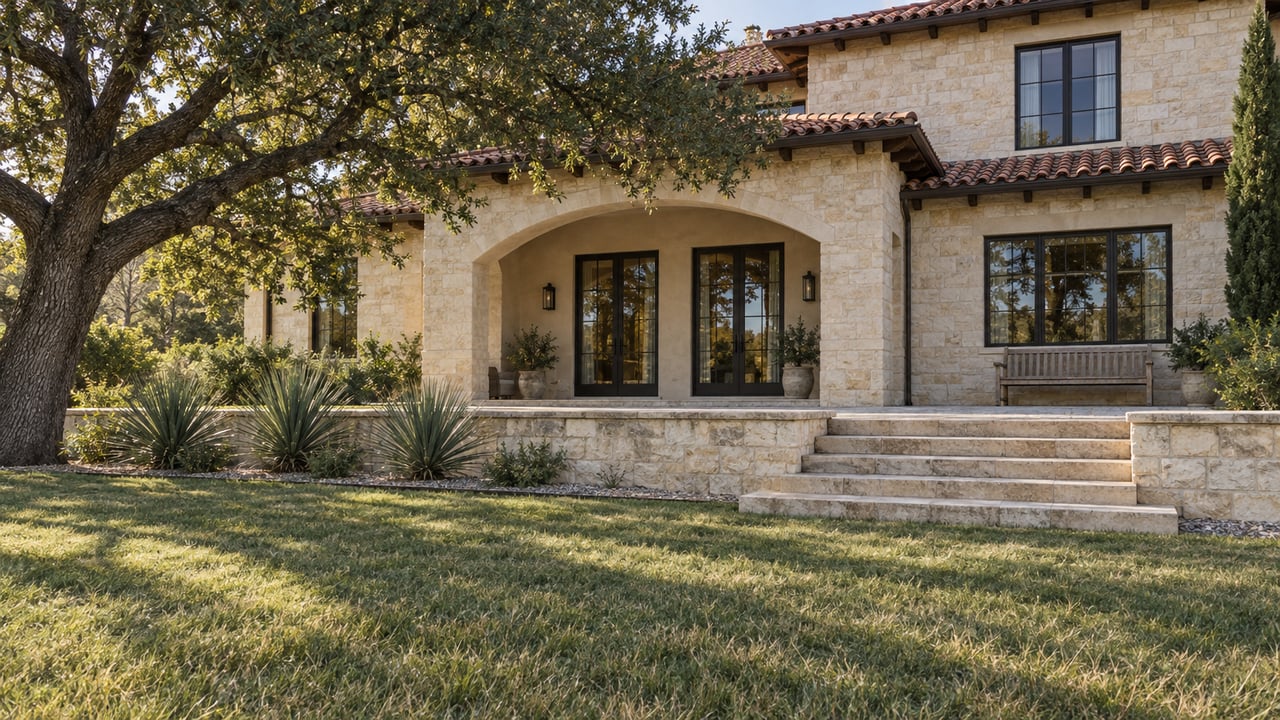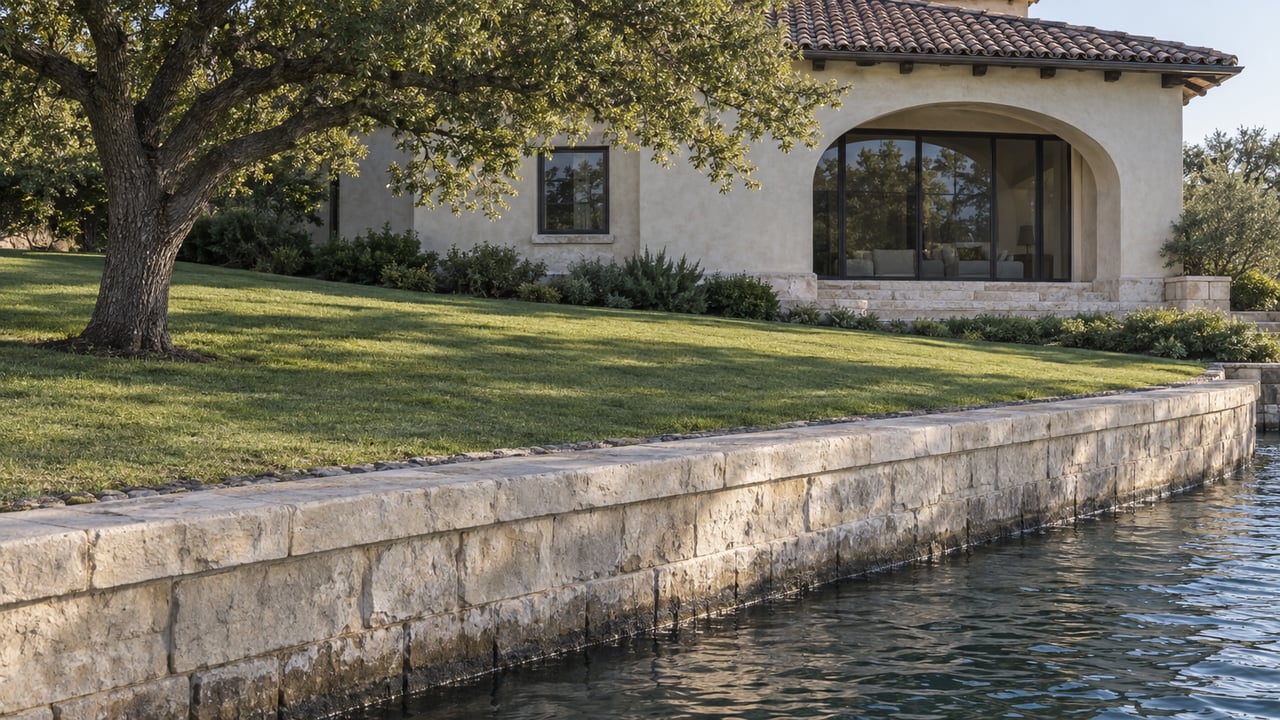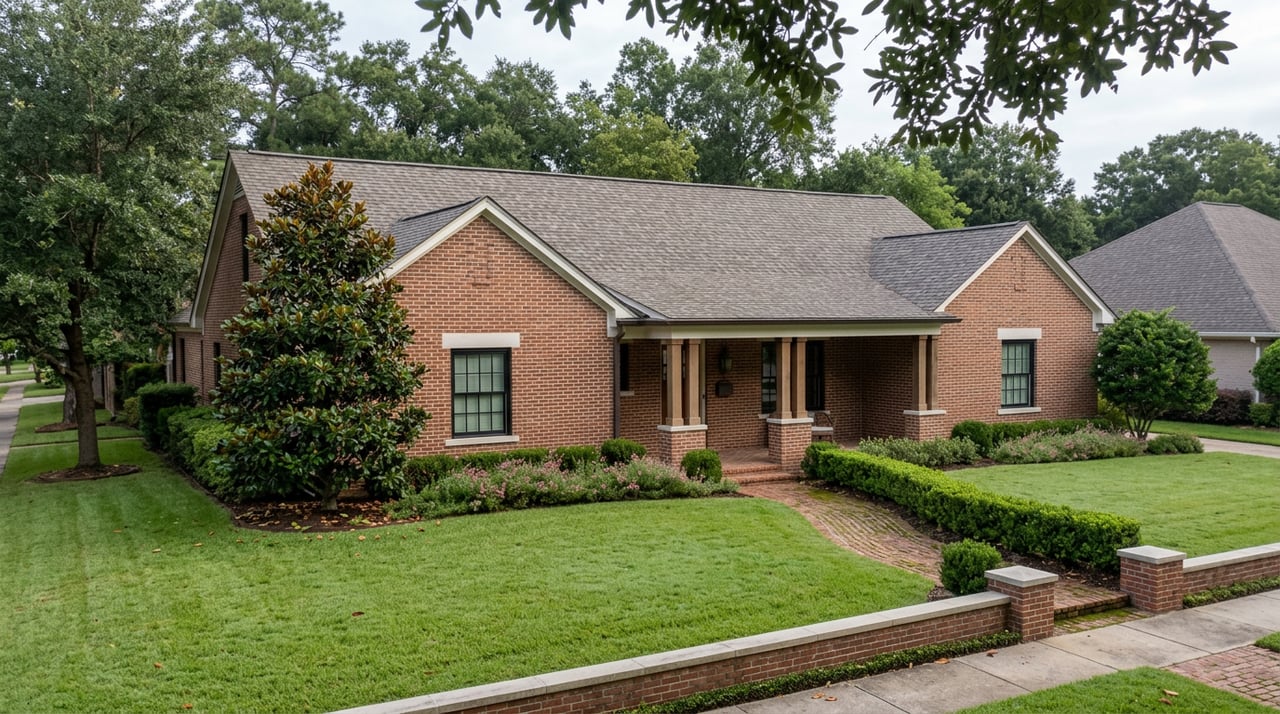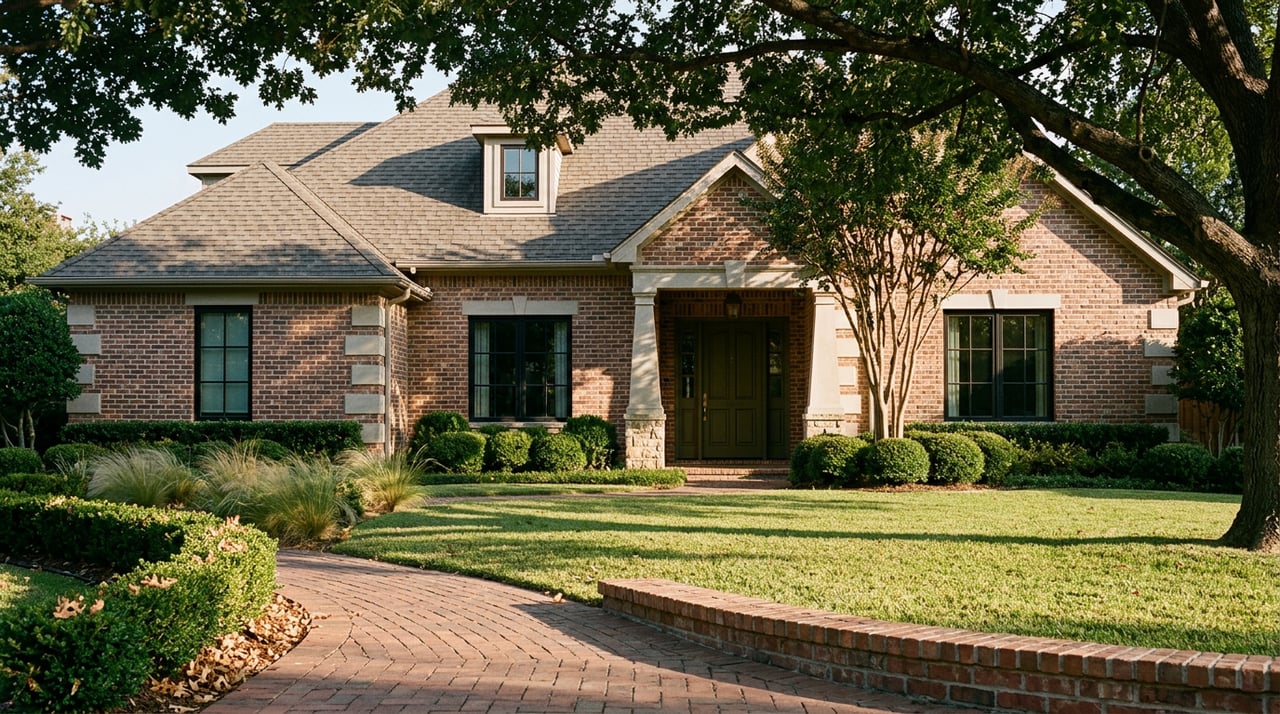
Two numbers came out of Riverhills in the same reporting window, as of August 2025. The median sale price fell 23.3 percent year over year, landing at $1.4 million. The median price per square foot rose 1.1 percent, to $376. Both numbers are accurate. Neither one, on its own, tells you what actually happened to home values in the neighborhood.
If you are watching Riverhills from the outside and you saw only the first number, you would assume the neighborhood cooled. You would be wrong, or at least wrong about why. The real story is that Riverhills is not one housing market wearing one HOA. It is at least three, built nearly two decades apart, and the confusion in the headline number is what happens when a handful of very different homes get averaged together in a market where sales are rare enough that one closing can swing the whole picture.
One Gate, Three Different Decades of Building
Riverhills sits inside the historic Edwards Ranch, developed in phases by Cassco, the ranch family's development arm. The first phase opened in 2007 with 56 lots. Those lots are long gone. Phase two followed. Phase three, the most recently completed section, sits next to Fort Worth Country Day School and Bryant Irvin Road, and it too has fully sold out. Two more phases are still planned for the future, which means the neighborhood you see today is not the finished product. It is a work in progress that has been progressing since before the last housing cycle.
That matters because a home built in the first wave of a 2007 phase is not competing on the same terms as a home finished a decade later in phase three. Lot placement changed. Design trends changed. The building code Riverhills' own Design Guidelines book enforces on new construction has been refined over multiple phases, and buyers touring a phase one resale today are touring a different product than buyers touring new construction in phase three.
Here is roughly how the phases stack up:
| Phase | Status | Notable proximity |
|---|---|---|
| Phase 1 | Opened 2007, sold out | Original 56-lot section |
| Phase 2 | Sold out | Interior streets, mature landscaping |
| Phase 3 | Most recent, sold out | Adjacent to Fort Worth Country Day School and Bryant Irvin Road |
| Phases 4 and 5 | Planned | Future development |
When a market this small has active listings spread across three completed phases and a limited number of annual sales, the median sale price stops behaving like a stable measurement and starts behaving like a coin flip weighted by whichever homes happen to close. A run of phase one resales in a given window pulls the median down. A run of larger, newer phase three homes pulls it up. Neither move means the neighborhood as a whole got cheaper or more expensive. It means the mix of what sold changed.
What a Phase Two Listing Actually Looked Like
A recent example makes this concrete rather than abstract. Earlier this year, a Riverhills Phase 2 home at 3824 Bishops Flower came to market with eleven foot ceilings, thirteen in the dining room, Schumacher wallpaper throughout, a turfed backyard with a putting green, and a rooftop patio with sweeping views back toward the city. The listing agent, Joseph Berkes, described the neighborhood this way: it delivers modern housing stock in the center of the city, with kids outside and neighbors who know each other, while still sitting minutes from TCU, Clearfork, Colonial Country Club, and the private schools that draw families to this corridor in the first place.
That home is not comparable to a phase one resale from 2007 on finish level alone, and it should not be priced or evaluated as if it were. Yet both homes fall inside the same neighborhood boundary that portals use to calculate a single median. A newer listing in phase three, at 3856 Bent Elm Lane, was still active this July, confirming that inventory continues to move across more than one vintage inside Riverhills at the same time. Any single median drawn from this mix is an average of homes that were never really competing against each other.
Why Low Volume Makes This Worse
Riverhills is not a subdivision with hundreds of annual transactions smoothing out the noise. It is a phased, low-turnover luxury community where the number of homes that sell in any given quarter can be counted on two hands. In a market like that, a median is fragile. Sell three phase one homes in a slow season and the number drops. Sell two phase three estates the next quarter and it jumps back. Neither swing reflects the community's underlying trajectory, which is why the price per square foot in that same August 2025 reading, calculated across a broader base of comparable finish levels, held roughly flat to slightly higher even while the median swung by nearly a quarter.
This is the same reason a single outlier sale can distort a small dataset in any statistical exercise. The fewer data points you have, the more each one weighs. Riverhills, by design, will always have fewer data points than a production subdivision, because it was built in controlled phases rather than released all at once.
What This Means If You Are Buying or Selling
If you are selling a phase one home in Riverhills, a headline median that references phase three finish levels will set the wrong expectation, in either direction. You want your comparables pulled from homes of a similar vintage and lot type, not blended across the whole neighborhood.
If you are buying and you saw a falling median and assumed you had found a discount, ask which phase drove the number down before you build a strategy around it. A lower median in a given month often means more entry level resales changed hands that month, not that the newest construction got cheaper.
If you are comparing Riverhills to other West Fort Worth communities, remember that the phase structure itself is part of the value proposition. Riverhills was designed with parkland, gathering spaces, and a design guidelines process meant to keep quality consistent from phase to phase, even as the phases themselves span nearly twenty years of changing tastes. That consistency, more than any single price point, is what a buyer is actually purchasing.
A Short FAQ
Does a falling median mean Riverhills is a buyer's market right now? Not by itself. The median moved because of which homes sold, not because values across the board declined. A meaningful read requires separating sales by phase and comparing price per square foot within a similar vintage.
Which phase is likely to hold its value best? There is no single answer that applies neighborhood-wide. Phase three's proximity to Fort Worth Country Day School and its newer construction give it certain advantages, while phase one's established landscaping and longer track record give it others. The right comparison depends on the specific home, not the neighborhood average.
Are there more phases coming? Yes. Two additional phases are planned beyond the three that have sold out, which means Riverhills' overall housing stock and its price data will keep evolving for years to come.
A single median can only tell you so much about a neighborhood built in careful stages over two decades. If you are trying to make sense of what a Riverhills home is actually worth, phase by phase and finish by finish, that is exactly the kind of granular read Raleigh Green puts together for clients before they make an offer or set a list price. Request a private consultation and we will walk through the comparables that actually apply to your situation.